- For anyone looking for 100% data
X-ray CT Scanning
Looking for high flexibility in dimensions, resolution and accuracy? With our current Metrotom 6 Scout, all this is perfectly possible. We can assist you with porosity analyses, mapping internal defects & hidden features and quick visual inspections.

General
Micro CT scanning is a non-destructive testing method that allows internal material inspection. This for both high-performance industrial plastics and light metals.
This measurement principle makes it possible to map process changes on the one hand, and to detect a lot of other information on the other. These include:
- Hard-to-reach zones
- Internal cavities and defects
- Possible obstructions
- Complex assemblies
- Different materials (with different density)
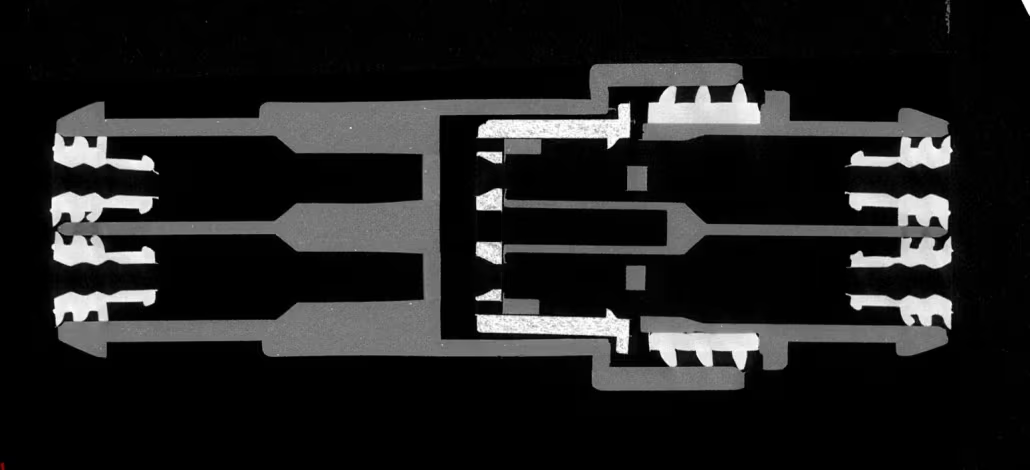
Internal defects & Hidden features
Seemingly simple products are often more complex than imagined. Parts can have deep ‘pockets’ and complex (internal) geometries.
All this data can be captured using CT scanning. So the great advantage of CT is that it can capture areas that are difficult to reach with more traditional equipment.
CT scanning: A non-destructive testing method where you can always obtain 100% data.
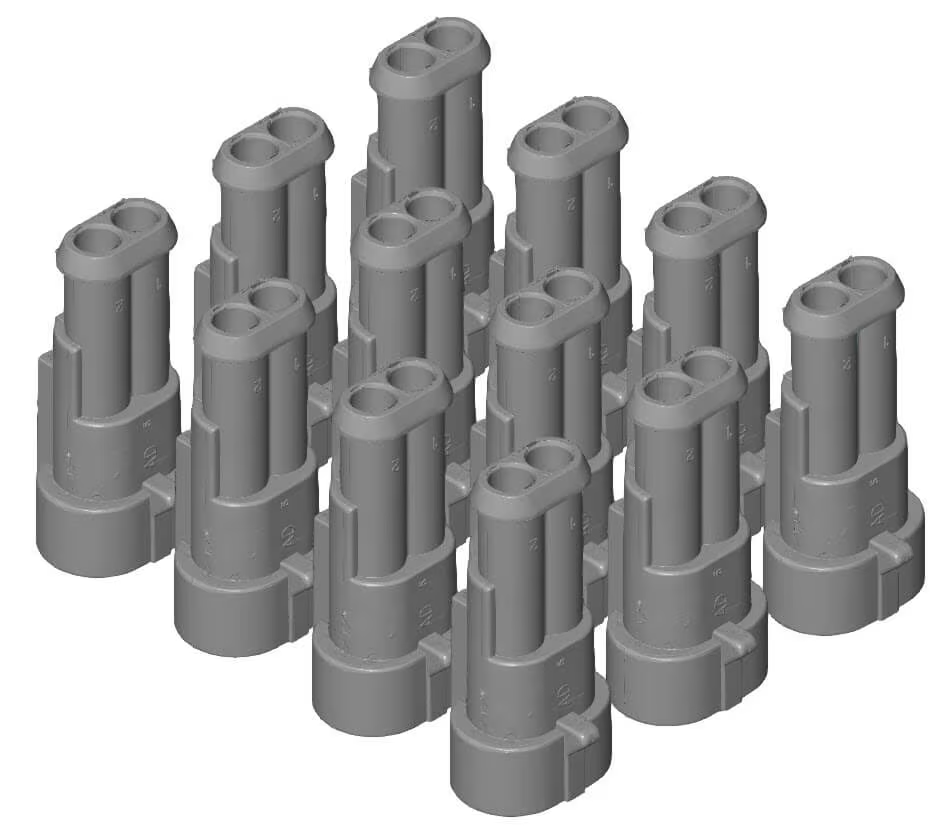
Serial measurements
A major advantage of CT scanning is that it does not need to be done individually per part. Multiple (smaller) parts can be scanned simultaneously so that measurements can be made in a cost- and time-efficient way. This can be interesting at different stages within the production process, for example:
- Golden samples
- Mould inspection + Pre-production inspection
- SPC (Statistical Process Control)
- Final inspection
- …

Quick visual inspection
The actual to nominal comparison option allows a very quick and visual check. Deviations between the physically produced part compared to the CAD data can be seen at a glance.
Furthermore, it is also possible to carry out a small series control and compare pieces with each other. One of the reasons why this technology is so popular within injection moulding.
Moulds can be adjusted, materials can change,… the smallest (process) change can have a major impact on the end result.
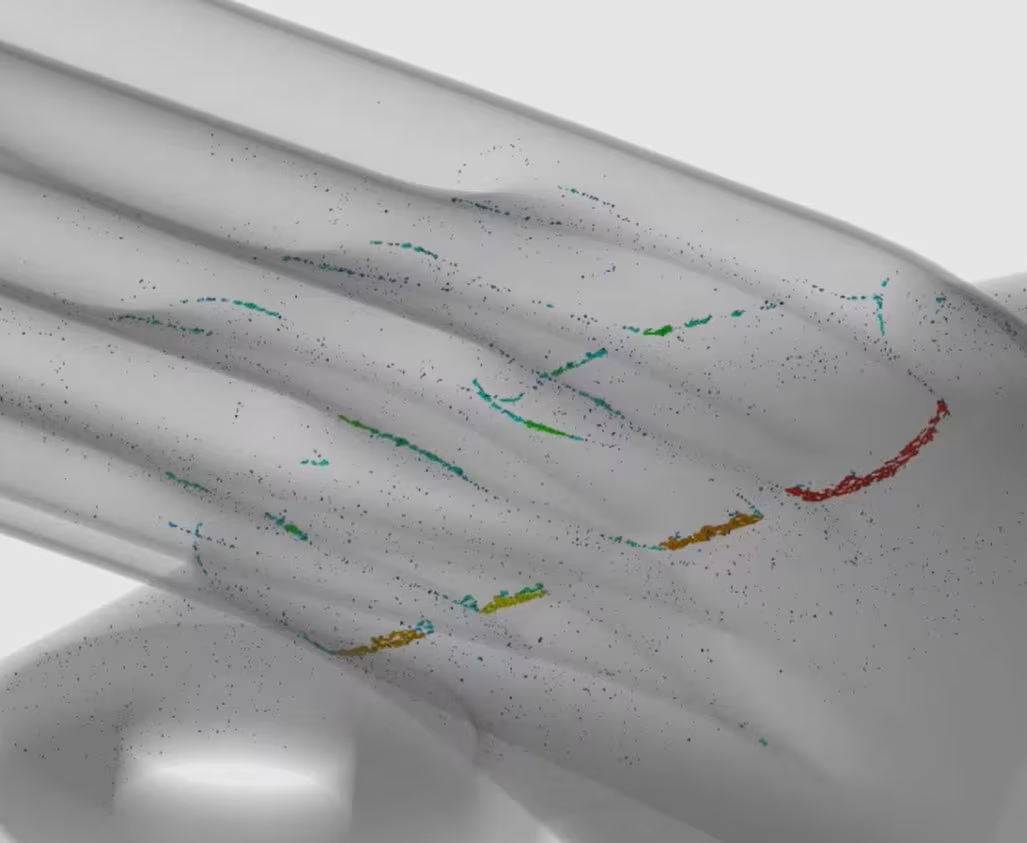
Porosity analysis
Process validation of 3D printed parts often requires a porosity analysis.
CT-scan data can be used to analyse the internal structure and draw conclusions regarding:
- The (possible) leakage and gas/air tightness of the component.
- The production process consistency
- The product durability
- …
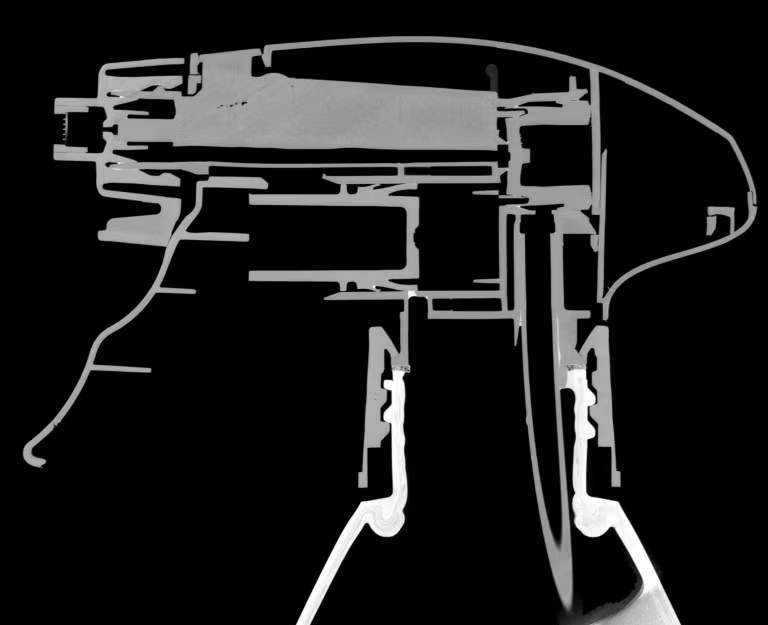
Assemblies
Because of the structure of a part, it is often not possible to demount it for quality control. Again, CT scanning offers a big advantage in comparison to other measurement methods. Consider checking:
- 2K Injection moulded parts
- Glued components
- Click-assemblies
- Multi-material parts
- …
Our cases
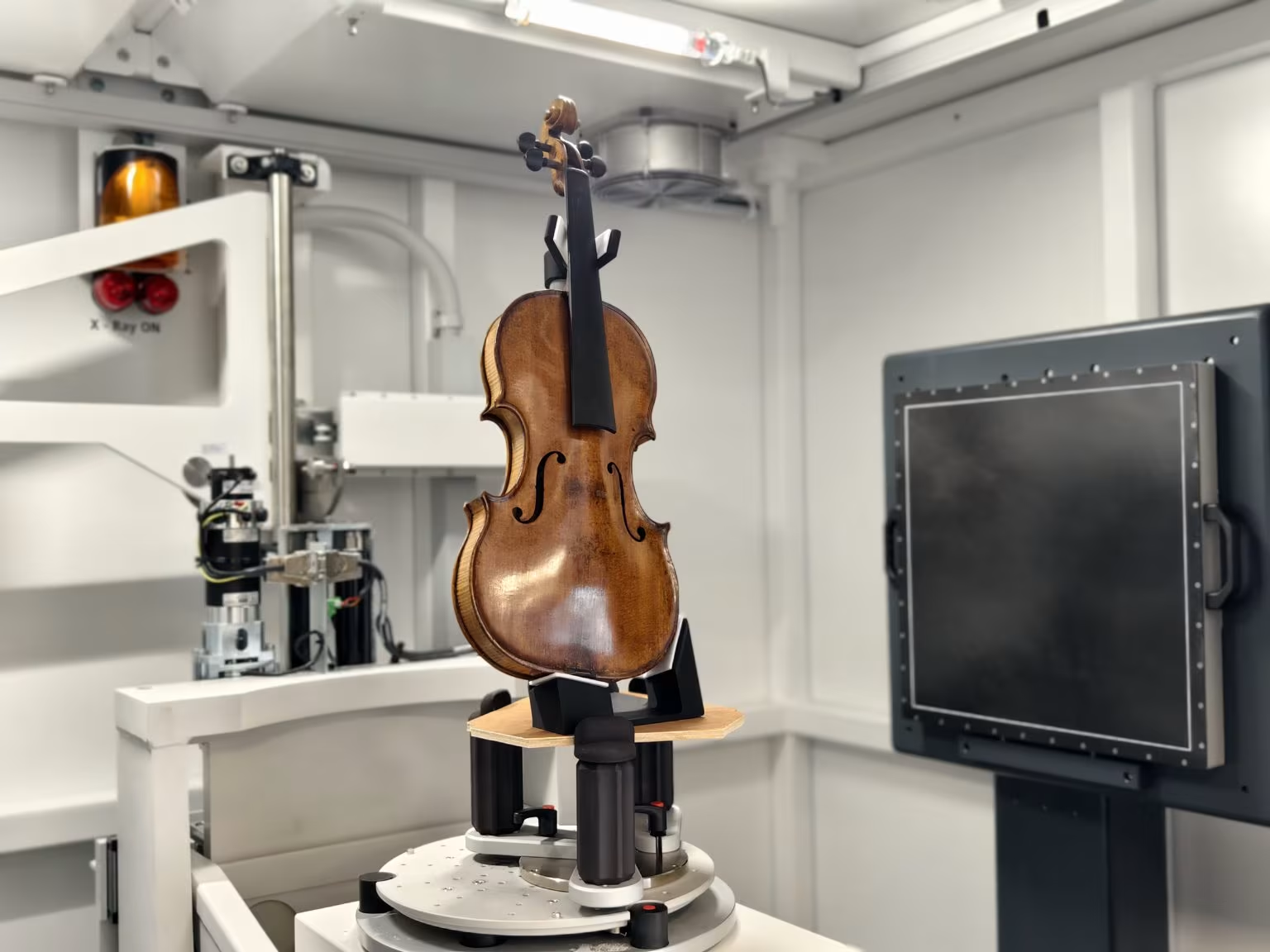
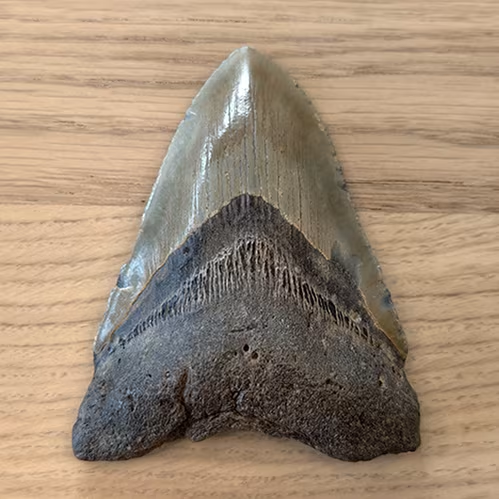
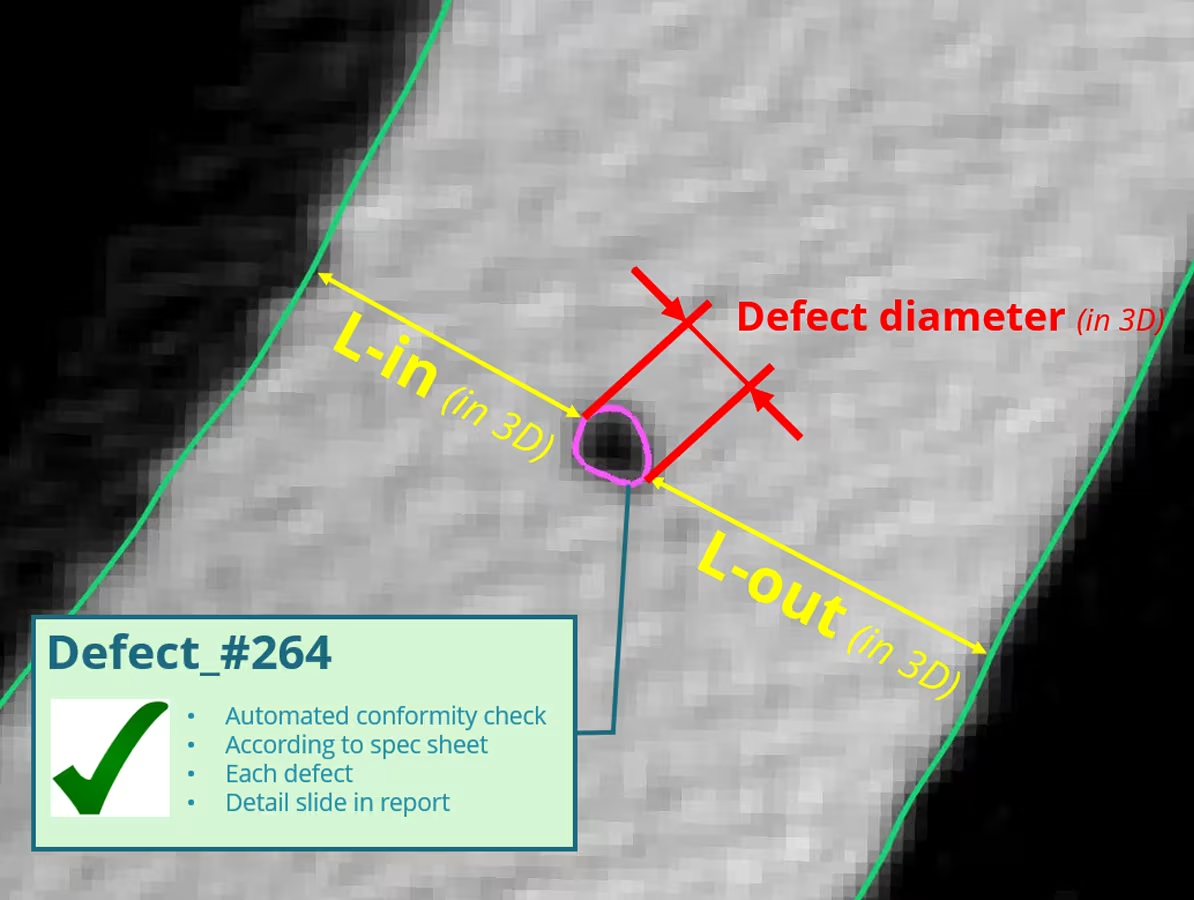
Want to know more about Tetravision?
Please contact us here. We always respond within 24 hours.
Our experts are at your service

Sofie Rasschaert
Technical Account Manager

Jurgen Van Donink
3D Metrology Expert & CEO

François Justin
3D Metrology Expert & CTO
Frequently asked questions about
X-ray CT Scanning
What is industrial CT scanning?
Industrial CT scanning (Computed Tomography) is a non-destructive testing method that uses X-rays to map both the internal and external structure of an object. Unlike optical 3D scanning, which only captures the external geometry, CT scanning delivers 100% data: from internal cavities and defects to hidden features. At TetraVision, we use the Comet Yxlon FF35 with dual tube configuration and the ZEISS Metrotom 6 Scout CT scanner for this purpose.
What materials can you CT scan?
We have two CT scanners, each strong in their domain. Suitability depends on two factors: the density of the material and the volume that needs to be penetrated. Lighter materials can be larger, heavier materials require a more compact volume.
What is the difference between CT scanning and optical 3D scanning?
With optical 3D scanning, we capture the external geometry using 3D scanners based on structured or laser light. This is fast and very accurate for surface measurements. CT scanning goes a step further: with X-rays, we also map the complete internal structure. This allows us to detect porosity, internal defects, hidden features, and material density differences, completely non-destructively.
What is industrial CT scanning used for?
The applications are broad. CT scanning is used for porosity analyses (especially for 3D printed and injection molded parts), detecting internal defects, assembly inspection of parts that cannot be disassembled, process validation, and quality inspection during various production phases. CT scanning is also the ideal method for reverse engineering of parts with complex internal geometries.
What is a porosity analysis?
A porosity analysis maps the internal structure of a part to detect air inclusions, gas bubbles, or other pores. This is especially relevant for process validation of 3D printed parts and injection molded products. Based on the CT scan data, we can draw conclusions about gas and air tightness, the consistency of the production process, and the durability of the product.
Can you CT scan multiple parts at once?
Yes. A major advantage of CT scanning is that multiple smaller parts can be scanned simultaneously. This makes series measurements cost and time efficient. Think of golden samples, mold inspection, pre-production inspection, SPC measurements, and final inspections. Visit our quality inspection page for more information about measurement reports and inspection options.
What is the accuracy of a CT scan?
The accuracy of a CT scan depends on the material, the size of the part, and the desired resolution. Our Comet Yxlon FF35 and ZEISS Metrotom 6 Scout each offer high flexibility in dimensions, resolution, and accuracy. TetraVision is ISO 17025 accredited, which guarantees that our measurement results are reliable, accurate, and traceable. Contact us for an estimate based on your specific part.
Is CT scanning non-destructive?
Yes, CT scanning is completely non-destructive. The part is not damaged or affected during the scanning process. This is a major advantage over traditional testing methods where parts often need to be cut open or disassembled. After the scan, you can simply use the part again.
Can you inspect assemblies with CT scanning?
Yes. Many parts cannot be disassembled for inspection, think of 2K injection molded parts, glued components, snap-fit assemblies, and multi-material parts. CT scanning offers a major advantage here: we inspect the complete assembly non-destructively and map all internal interfaces.
How quickly will I receive the results of a CT scan?
Our standard lead time is approximately 5 working days. Depending on the complexity of the project and accompanying reporting, this may vary. We always provide a free ZEISS Inspect viewer file so you can view the results in 3D yourself. Contact us for a concrete estimate, we always respond within 24 hours.
What does an industrial CT scan cost?
The price depends on the material, the size of the part, the number of pieces, and the desired analysis (for example, porosity analysis, dimensional inspection, or assembly check). We create a customized quote for each project. Request your quote here, you will receive it within 24 hours.

